Survivor Story
Yakov Liberman, born 1937
And Still, I Am in Jerusalem
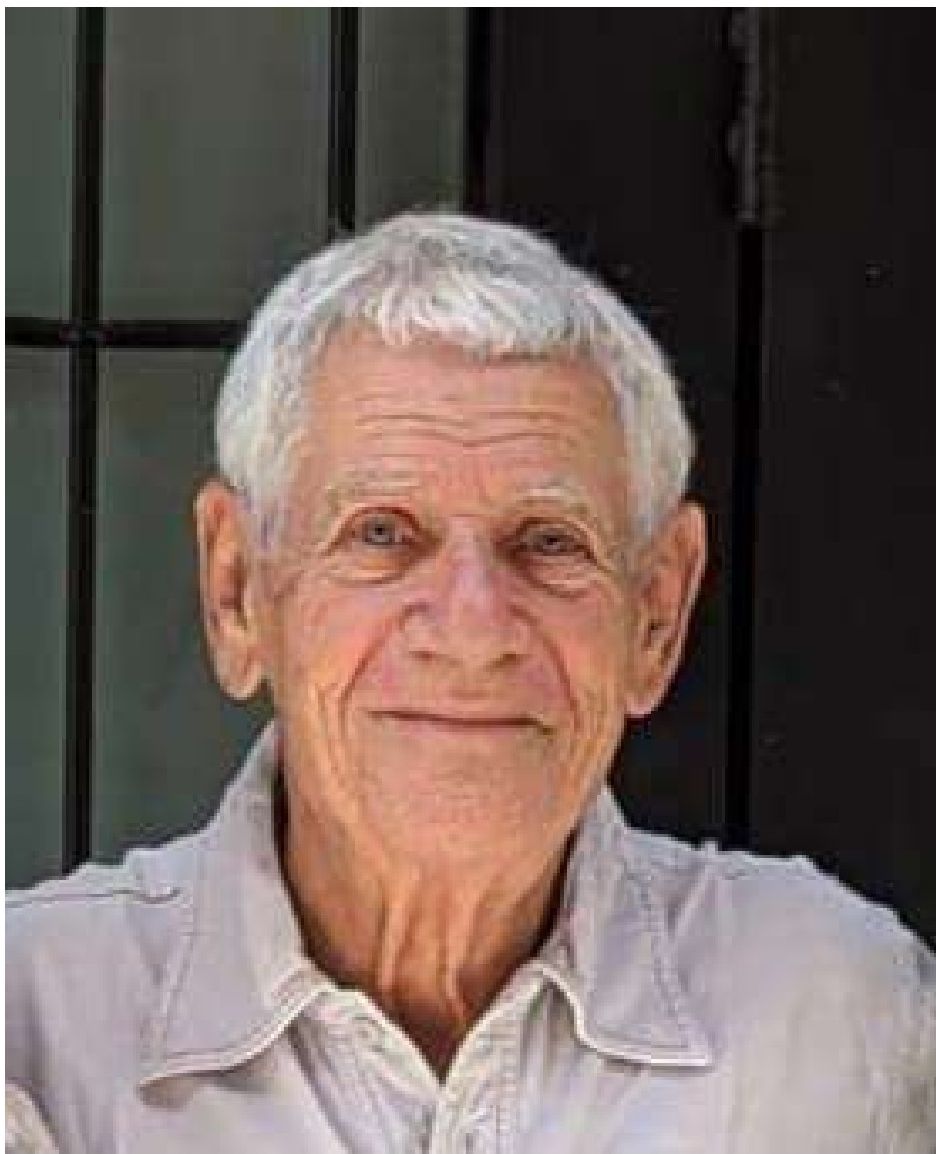
I live in Jerusalem. I am the chairman of the Jerusalem Society of Holocaust Survivors. Today our organization counts more than a thousand people, with an average age of eighty seven. We are the living history of our state.
I could speak much about today, but I want to share my personal memories of the days I spent in occupied territory.
The Germans took Rostov on Don on November 21, 1941, only five months after the war began, and it was very sudden for us. Rostov was given up without a fight. They entered with music. Two groups, Germans and Romanians, came in as if into their own home. We Jews did not know what would happen. We had heard things, knew things, but we were not going to surrender. Finding ourselves in occupied territory, we decided to save ourselves, not to walk to our deaths.
Already on the second day the Germans issued a decree organizing a Jewish council and laws under which any offense meant being shot. Shot for not coming to register. Shot for not wearing the yellow star. Shot for everything. We did not go to register. We did not go to the assembly point, although I saw a group of Jews, led by a rabbi, walking toward it. I did not understand what would happen to them. I asked my mother why we had not gone. My mother told me we would not go with them, that we must be silent, tell no one we were Jews, and to survive we must be silent and hide.
“I have many memories, many. But I have said the main thing. Three times we miraculously survived. Three times they tried to kill us.”
I learned this. We were very quiet, waiting for our deaths. On the second day kind neighbors brought a fascist officer with two soldiers to our apartment. At that time many neighbors from the fourth floor were living with us, fearing the bombing. We had a large apartment on the ground floor, we had room, and we let our neighbors stay. The officer was brought, and a boy who knew German, taught by his mother, told the officer in German that there were no Jews here. The woman who had brought him did not know German, she could not say anything. While the boy was speaking, we slipped out through the back exit and hid in our shed.
Each apartment had its own shed under the building. In ours stood a huge old sign, a thick heavy wooden board faced with thin metal, painted with a clock and the words Watch Repair. Before the revolution my grandfather and grandmother had owned a two story house on the main street, with two workshops. Jews in Russia were allowed to live in the cities only as craftsmen. He repaired watches and small jewelry, and grandmother was a fine seamstress. The sign was so large it would not fit lying down or standing up. We laid all the rags we had under it, and hid beneath it.
On the third day the kind neighbors brought the Germans again, in a large group. They found our shed, broke the door, shouted, fired bursts from machine guns. But we lay under the board, under heaps of old things, and we kept silent. So we were saved a second time. Twice we were miraculously saved from being shot. After that we feared everyone. We were afraid to ask the neighbors for food, afraid to go out, afraid of everything. The only thing in that basement was a shared toilet and shared water. There was no light, because we had cut the wires. That is how we survived.
The first occupation of Rostov lasted nine days. Nine days we starved, drank water, ate everything that could be eaten. We survived. After what we had been through I lost my voice, and until I was twenty five I stuttered badly. From the starvation I had peritonitis and a twisted bowel, problems that have stayed with me to this day.
On November 29 Rostov was liberated, and we crawled out of our shed. The neighbors were astonished that we were alive. They had long since buried us and started dividing our things. But we appeared, and somehow they were glad. We lived in Rostov a while longer, but when we saw Rostov was being surrounded again, we wanted to evacuate. The commandant, whose name was Borshch, issued an order to let out only those who had worked a certain number of hours digging trenches. We had no men, only women and small children.
We Jews gathered, pooled money, and hired a one and a half ton truck, the largest then. The driver agreed to take us only at night, quietly. He told us to take no belongings, only documents, money, and the clothes on our backs. He told us to sew an enormous white tarpaulin with a large red cross in the middle. The women sewed it. We set off under this tarpaulin and were attacked. A bomb fell directly on the red cross. Nothing was left of the truck. All our documents, valuables, and the things we had taken burned with it.
From there we fled however we could. I do not remember the rest of the road well. I remember only that we starved, and no one met us with bread and salt. We bartered everything we had, and somehow reached the city of Frunze, where again no one met us with bread and salt. We were given a shed with a clay floor. We brought straw from the field, laid it down, and all of us slept on that straw in that shed. That was the apartment we rented, for which we paid a great deal.
I was a small boy. I found a large copper kettle in the shed, cleaned it, and sold water at the bazaar, shouting, who wants cold water, tap water, though there was no tap. We drew water from the irrigation ditches. I remember how we made cakes from manure we collected in the street, mixed with coal dust, called shtyb. Those cakes saved us. We sold them to landlords and paid the rent. With the money we earned from those cakes we returned to Rostov.
I remember my mother, an optician by training, a craftswoman, grinding lenses by hand on a stone.
I have many memories, many. But I have said the main thing. Three times we miraculously survived. Three times they tried to kill us.
About this story. Recorded and edited for Light of Care. Stories are preserved as told and lightly edited for clarity.